
Last updated November 25, 2026
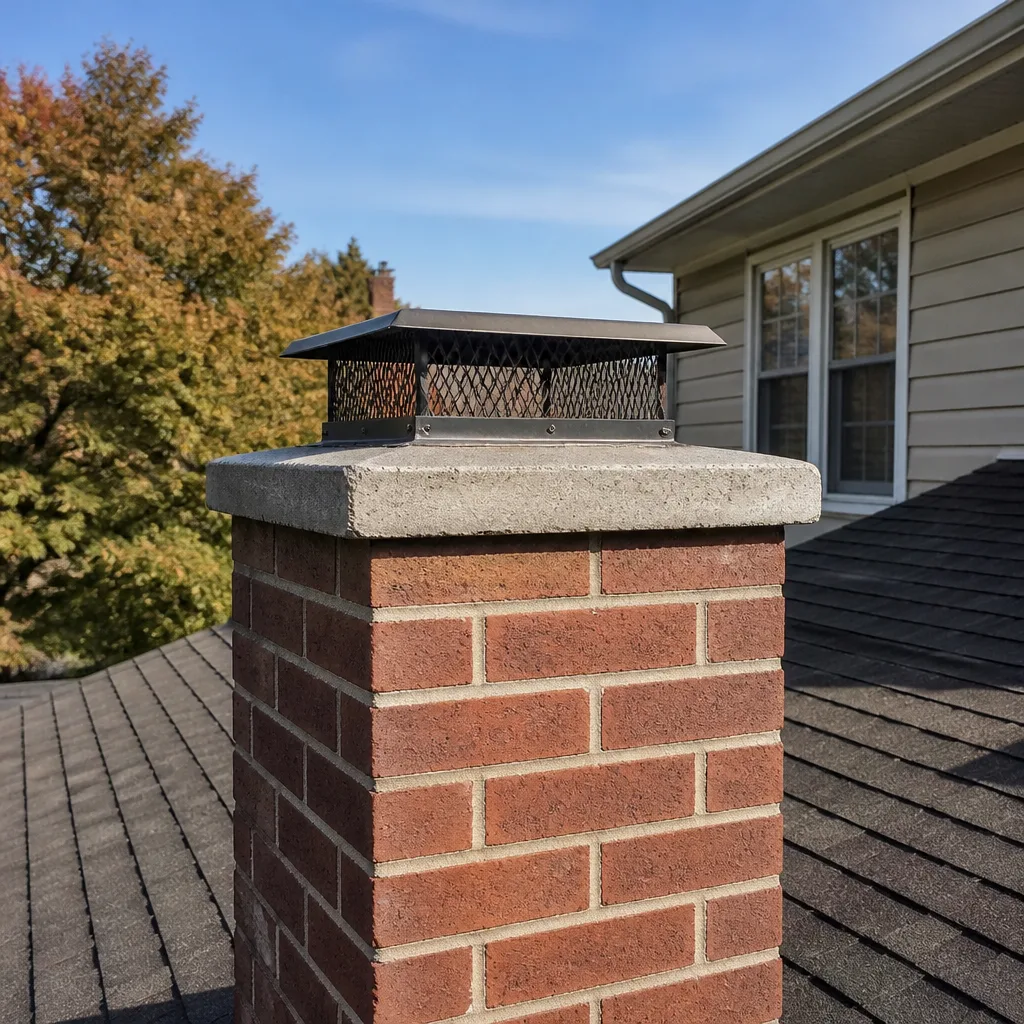 Sweep & inspection
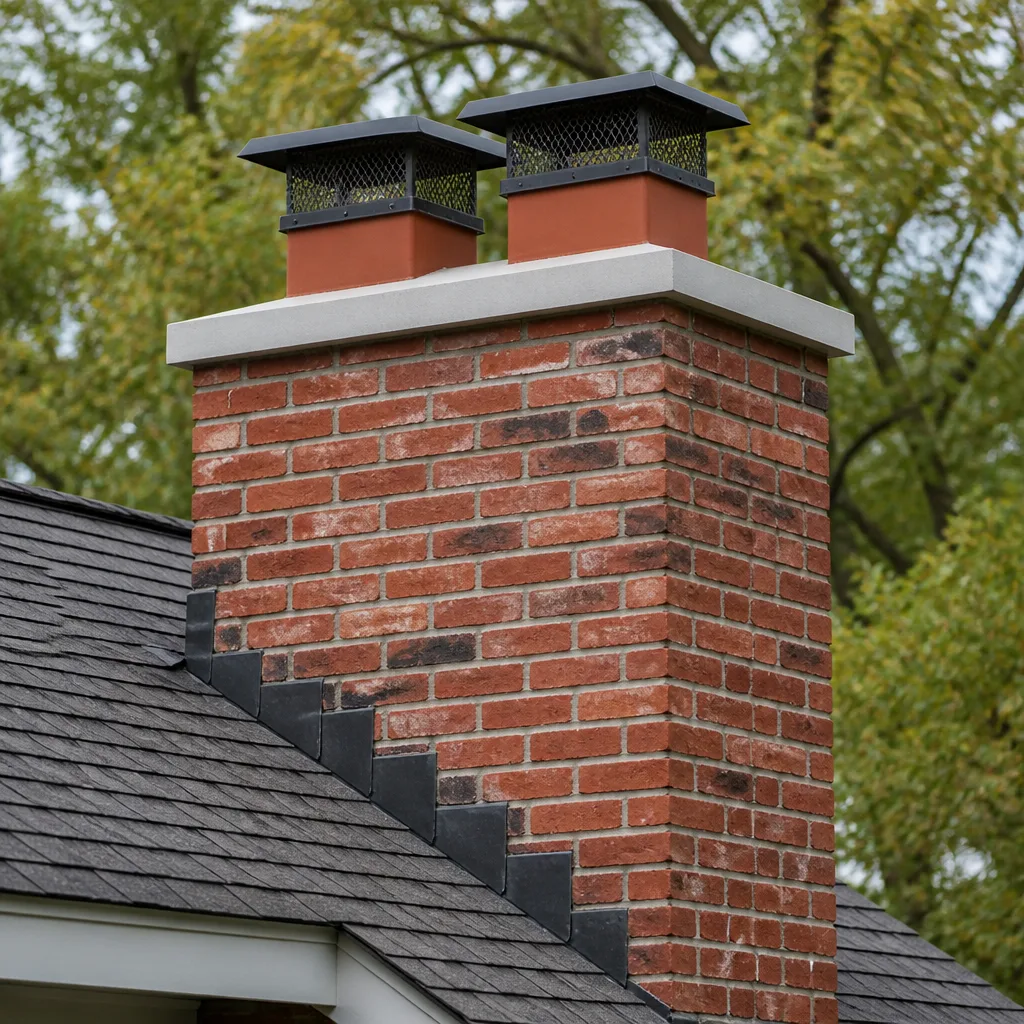 Caps & crowns
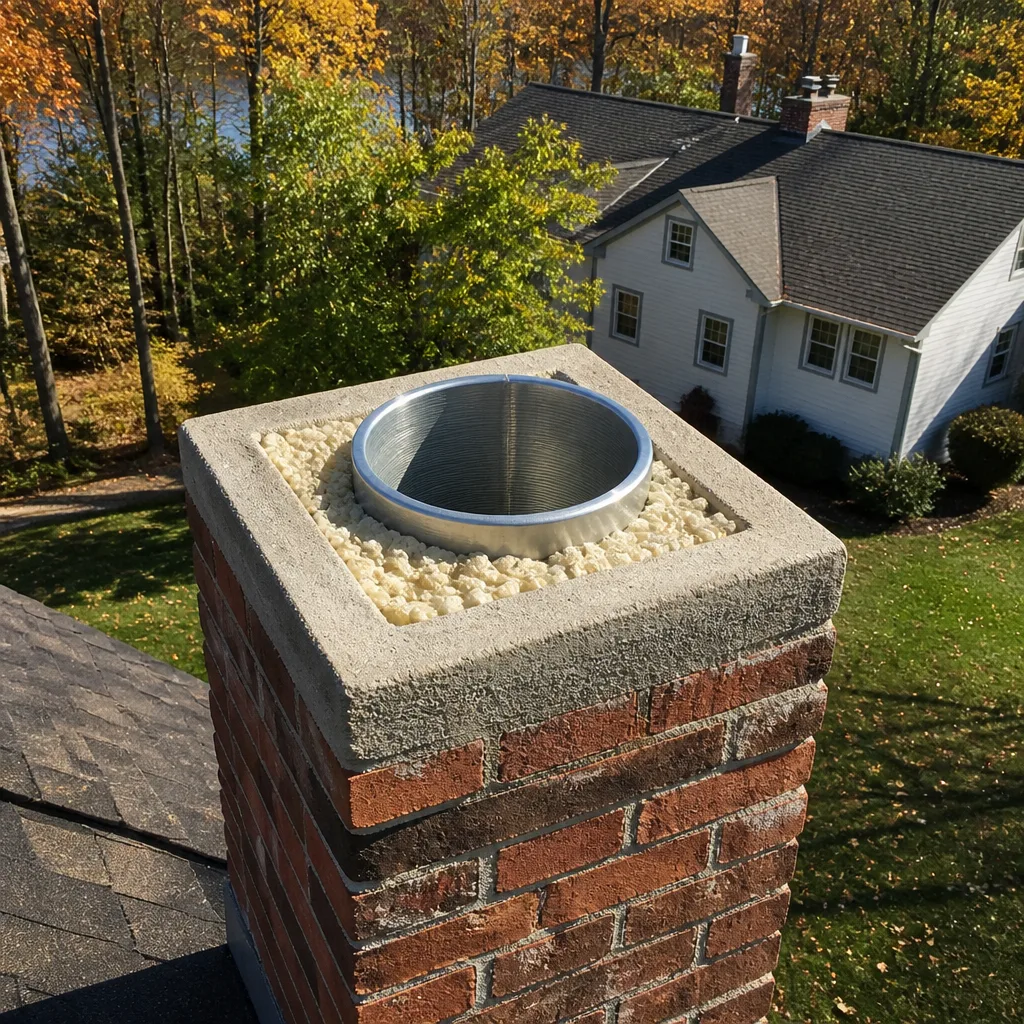 Flue relining
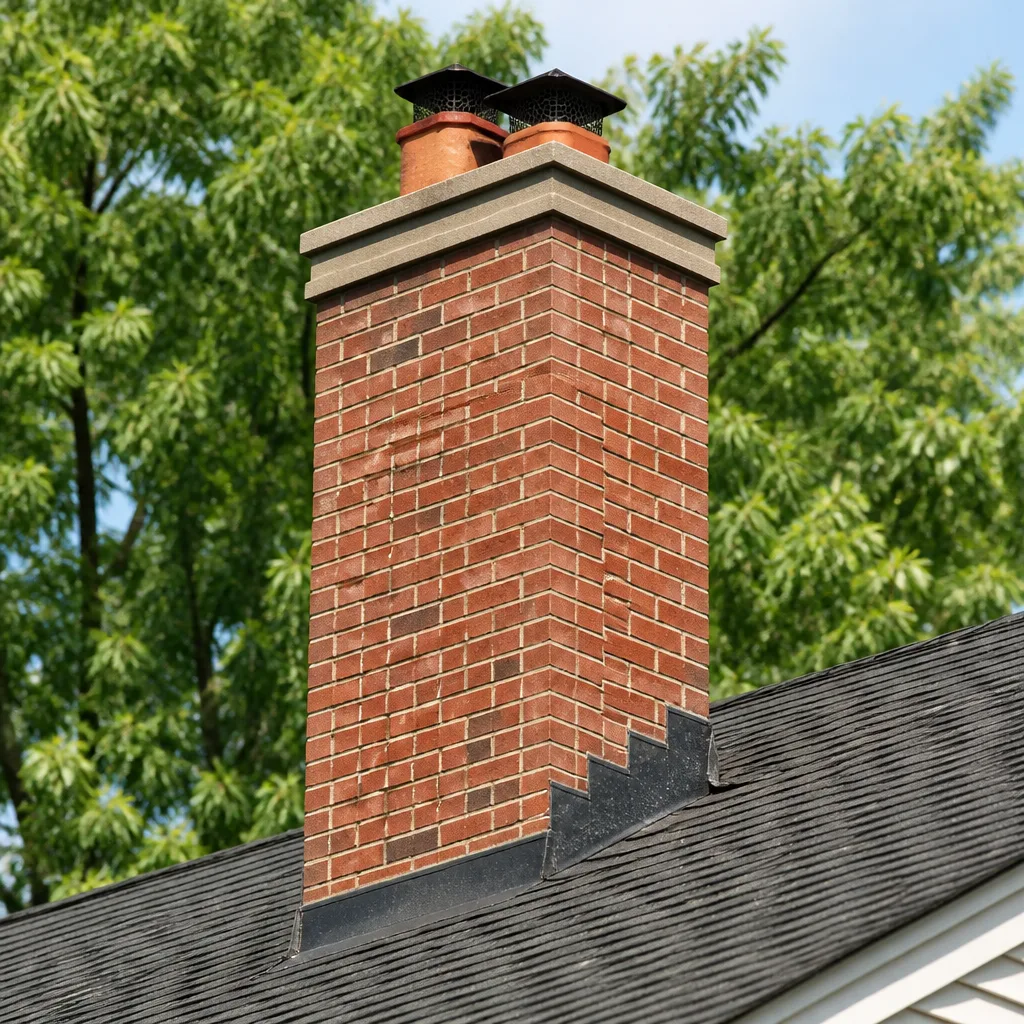 Masonry repair
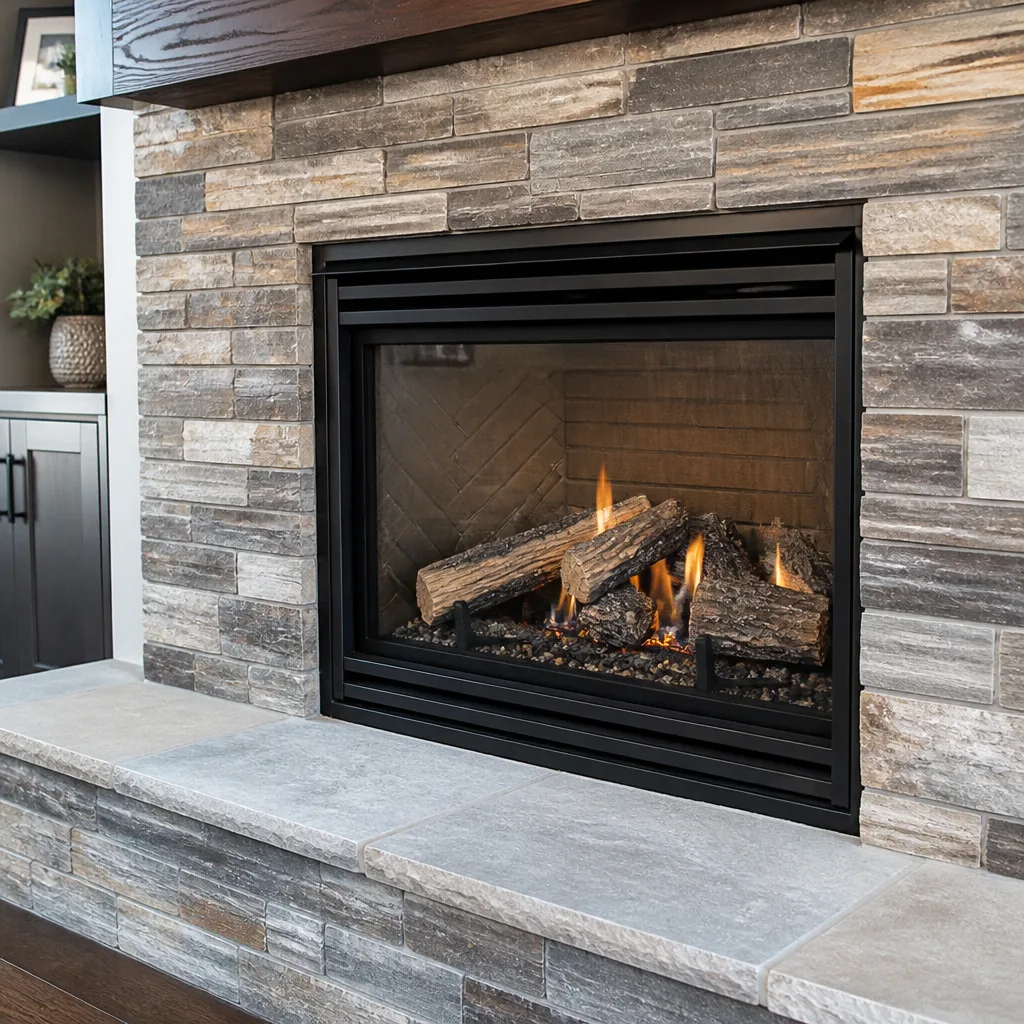 Gas fireplace service
Level 1 sweep and inspection to the NFPA 211 annual standard - flue, crown, cap, and flashing checked and photographed
Chimney sweep logs do not sweep chimneys. They loosen some creosote - which then falls where a brush and vacuum still have to collect it.
Chimney Cleaning Warning Signs: An Edmonds Homeowner’s Reference Guide
A chimney fire hot enough to crack a terracotta liner can burn fast and clean enough that nobody in the house notices it happened. The fire goes up, the flue survives or it doesn’t, and life carries on. What it leaves behind is a liner breach that makes the next fire genuinely dangerous, and the homeowner has no idea. Most warning-sign guides point you toward smoke rollback and visible cracks, and those matter. But the conditions that actually cause chimney fires in Edmonds often produce no visible warning at all. This guide teaches you to read the indirect signals those hidden problems give off.
Quick Answer
The warning signs that matter most in Edmonds chimneys are indirect: a sharp, acrid odor from the firebox on warm days, draft that’s gotten noticeably weaker over a season, smoke that turns from white to gray-black during startup, and chalky white staining on exterior brick. Those signals point to glazed creosote or a compromised liner long before you’d see a crack. Any of them means the chimney needs a professional inspection before the next fire, not after.
Styles & brands we work with
- Sweep & inspection
- Caps & crowns
- Flue relining
- Masonry repair
- Gas fireplace service
Table of Contents
- Why the Most Dangerous Chimney Problems Give No Visible Warning
- Reading Creosote: What the Three Degrees Actually Look Like
- The Three Indirect Signals: Odor, Draft, and Smoke Color
- Puffback Versus Sustained Smoking: What Each Tells You
- Exterior Masonry Staining: Efflorescence Versus Tar Streaking
- How to Spot a Past Chimney Fire in a Home You Just Bought
- Warning Signs in Edmonds’ 1980s-2000s Prefab Fireplaces
- What a Professional Inspection Checks That You Can’t
Why the Most Dangerous Chimney Problems Give No Visible Warning
Third-degree creosote is the worst of the three creosote classifications, and it’s the hardest to see. It forms as a glazed, hardened shell bonded to the flue wall, often shiny and dark. From the firebox, looking up, you can’t see it at all beyond the first couple of feet. It looks like part of the chimney, which is precisely the problem. The glazed layer is highly combustible, and once it ignites, it burns hot enough to damage masonry and crack terracotta tile. In our experience across Edmonds homes, glazed creosote almost always comes from one pattern: burning wood that isn’t fully seasoned, combined with frequent low, smoldering fires that never get hot enough to burn the deposits off.
Hidden liner breaches work the same way. A hairline crack in a terracotta liner, or a gap at a flue tile joint, isn’t visible from the firebox. It becomes a fire path into the wood framing and insulation around the chimney. It also lets carbon monoxide migrate into living space instead of up the flue. Your carbon monoxide detector might never trigger if the leak is small, because the concentration stays below the alarm threshold while still being present.
This is why “look up the chimney with a flashlight and see if it looks clean” fails as a diagnostic method. The chimney tells you what’s wrong indirectly, through how it smells, how it drafts, and how it behaves at startup. Learning to read those signals is the practical skill this guide is built around.
Reading Creosote: What the Three Degrees Actually Look Like
Chimney professionals classify creosote in three stages, and knowing the stages helps you understand what the odor, draft, and smoke clues are pointing to. The classifications are standard across the trade.
- First-degree creosote is a light, flaky, soot-like deposit, usually gray or black. It brushes off easily and builds up fastest in the smoke chamber and at the top of the firebox. Regular annual cleaning handles it routinely.
- Second-degree creosote is a thicker, crusty, tar-like deposit that clings to the flue wall in ribbons or patches. It doesn’t brush away easily and needs scraping with specialized tools. Cleaning at this stage is still a cleaning job.
- Third-degree creosote is glazed and hardened, often with a shiny, bubbly appearance. It’s tightly bonded to the flue and can’t be removed with standard brushes. This is the stage that means the chimney has a genuine fire hazard, and it usually requires chemical treatment or liner resurfacing.
The practical point: you can’t tell first from third by looking up from the firebox. That’s why professional evaluation matters. A chimney sweep technician using a camera sees the full flue, top to bottom, and photographs the condition. A camera inspection removes the guessing entirely.
The Three Indirect Signals: Odor, Draft, and Smoke Color
The odor profile
Creosote has a sharp, acrid, almost sour smell, like old campfire mixed with tar. You’ll notice it most on warm days when the chimney isn’t drafting and the pressure in the house pushes air down the flue. If your firebox smells strong in July and August, that’s not a problem with your house. It’s a sign of significant creosote buildup. The stronger the smell, the heavier the deposit. A faint smoke smell after a fire is normal for a day or two. A persistent, sharp odor weeks after your last fire is a warning.
Draft behavior changes
Every chimney drafts the same way year after year, so a change is meaningful. If your fireplace used to light quickly and now takes longer to catch, or if smoke drifts into the room on startup but clears once the fire is hot, the draft is weaker than it was. That usually means the flue is narrowed by deposit, or the cap is obstructed. A slightly undersized flue draft can feel like “the fireplace is just being difficult.” It’s telling you the flue is loading up.
Smoke color during startup
Startup smoke should be thin and white or pale gray. Dense, dark gray to black smoke from a fresh fire, especially before the wood is well-lit, is a strong indicator of heavy creosote. The dark color is unburned carbon and tars, and they’re depositing on the flue as they travel. If your chimney gives off black smoke early in a fire, the flue is likely holding second-degree or glazed deposits already. In this stage, call a professional chimney sweep in Edmonds before using the fireplace again.
Puffback Versus Sustained Smoking: What Each Tells You
Homeowners often use “smoking” to describe two different problems that have different causes. Distinguishing them is useful because it tells you what kind of obstruction you’re dealing with.
- Puffback on startup is a short burst of smoke that puffs out of the firebox, then stops once the fire catches. It usually points to a partial blockage: a small deposit roof over the flue, a bird nest near the top of the chase, or a clogged spark screen in the cap. The chimney can push smoke when cold, then works once warm air rises. Puffback is common in spring when the draft is weak and animals nest in chimneys.
- Sustained smoking is continuous smoke into the room through the fire, not just at startup. That indicates a serious obstruction or a draft failure: a fully blocked flue, a broken cap, a severe negative-pressure problem in the house, or an improperly sized flue for a new fireplace insert. Sustained smoking is a stop-and-call situation because it can indicate a fire risk or carbon monoxide exposure risk.
If you see puffback, don’t assume it’s harmless. It’s a signal your flue or cap has a blockage that a proper cleaning or cap inspection would resolve. If the smoking is sustained, don’t keep burning, and have it checked before the next fire.
Exterior Masonry Staining: Efflorescence Versus Tar Streaking
The outside of an Edmonds chimney can tell you a lot, if you know which stain means what. Two common masonry stains look different and point to different internal problems.
Efflorescence is a chalky white or pale gray deposit on brick. It’s salt from the masonry migrating to the surface as moisture moves out of the brick. It means the brick is wet and drying. Efflorescence by itself is a moisture clue, not a fire hazard. It usually comes from a failing crown, a bad flashing joint, or missing mortar that lets water in. A chimney cap and crown installed by a specialist stops this before it turns into spalling brick.
Tar streaking is a dark brown or black stain that runs down the exterior from the top. It’s not water: it’s creosote and smoke residue that has leaked through cracked flue tiles or failed mortar joints. Tar streaks on the outside almost always mean there is a liner breach or a serious masonry failure behind the brick, and that path could also be carrying carbon monoxide. This pattern is one our technicians watch for on Edmonds brick chimneys, and it usually leads to a camera inspection and relining discussion.
One way to distinguish them: tar streaks feel slick or tacky and usually start from the top, whereas efflorescence is powdery and spreads around mortar joints. If you’re not sure which one you’re seeing, a professional inspection settles it.
How to Spot a Past Chimney Fire in a Home You Just Bought
A chimney fire can happen in a home before you own it, and the seller may have had the chimney cleaned afterward to hide the evidence. But a surface cleaning removes only the soot and first-degree deposit. It doesn’t repair a cracked tile or a heat-stressed flue joint. If you’ve just moved into an Edmonds home with a fireplace, here’s a fast way to identify possible past fire damage:
- Look for heat damage around the firebox. Discolored metal lintels, warped damper doors, or spalling in the firebox brick suggest extreme heat.
- Check the chimney cap for heat damage. A melted spark screen or a warped cap is a strong indicator the flue reached very high temperatures at some point.
- Look for spalling or popped terracotta tiles at the top of the chase. Terracotta tiles that have cracked or flaked their surface often show the flue got dangerously hot at some point.
- Look for the “surface clean but interior dark” pattern. A recently swept chimney with unusually dark conditions just above the smoke chamber could suggest heavy soot was disturbed from the top but not fully evaluated.
- Book a camera inspection. A sweep with a camera looks at every foot of the flue, discovers hairline cracks and glazed patches, and captures images you can keep. That is the only reliable way to know whether the chimney has fire damage that a cleaning didn’t touch.
If you’re buying a house in Edmonds and the inspection comes back with any concern, a chimney professional can discuss repair routes: HeatShield resurfacing for a deteriorated flue liner that doesn’t need full replacement, or DuraFlex flexible lining when a real liner replacement is needed.
Warning Signs in Edmonds’ 1980s-2000s Prefab Fireplaces
A significant share of Edmonds homes contain prefabricated zero-clearance fireplaces installed from the 1980s through the early 2000s. These aren’t masonry chimneys and most definitely aren’t built the same way. They’re metal fireboxes surrounded by a vented chase, with a stainless flue pipe and a set of internal clearances that are exact. The warning signs are different from those of masonry chimneys, and worth knowing specifically.
- Rust streaks or corrosion on the firebox face. Prefab metal firebox panels can rust, either from moisture in the chase or from a roof leak. Rust flaking off the firebox is worth investigating.
- A slight, persistent odor of metal or paint. A hot metal firebox smells metallic if it’s been overheated. That’s a signal to stop using it and have it checked.
- Discoloration or blistering on the firebox panels. This is a strong sign the unit was run hot, possibly with the wrong fuel or excessive load.
- Loose or detached flue sections inside the chase. A joint that has separated lets exhaust into the chase. You can’t see it from the firebox, but a camera inspection sees it easily.
- A cap or chase cover missing at the top. If the prefab chase has lost its cap, rain and debris go straight into the flue. Olympia Chimney replacement caps are an exact-fit option many prefab chases need.
In our experience, Edmonds homeowners with prefab fireplaces often don’t realize the unit isn’t a masonry chimney. That changes the inspection and the repair scope entirely. One crew that handles both types removes the confusion.
What a Professional Inspection Checks That You Can’t
A hands-on professional inspection differs from a visual once-over in what it examines and in how it records the findings. The chimney sweep professionals our company works with spend the inspection checking the flue interior with a camera, from the firebox through to the cap. Here’s what a real inspection covers:
- The full flue length, top to bottom. A camera catches cracks in tile, separation at flue joints, and third-degree glazing spots that a flashlight can’t find.
- The smoke chamber. This sloped interior above the damper collects deposits on its corbelled walls and needs its own attention during cleaning.
- The damper and firebox. Condition of the damper plate, firebox brick, and firebrick joints. If any of these need repair, that’s a fireplace repair scope, not a sweep. It all feeds into what a professional inspection tells you about your fireplace.
- The cap and crown. A failing crown or missing spark screen is the number one reason rain and animals get in.
- Clearances to combustibles. The visible gaps between the chimney and framing, insulation, or roof decking.
The inspection produces photos, and the sweep walks you through them. You see what we see. That’s the point.
Common Mistakes to Avoid
- Assuming “no smoke on the day I looked” means the flue is clean. A chimney can hide glazed deposits and hairline breaches that don’t show up in a visual check from the firebox. The signs live in smell, draft behavior, and exterior staining, not in what looks clean from the hearth.
- Burning damp wood all winter. Wood that hasn’t dried to the proper moisture level is the main driver of second- and third-degree creosote. If wood hisses at the ends when burned, it’s not dry enough for an Edmonds fireplace.
- Skipping a chimney cap because the chimney “looks fine from the ground.” A missing cap is the most common entry point for water, birds, and debris in Edmonds chimneys, and you can’t see down the flue from below. A cap pays for itself in avoiding water damage and blockages.
- Confusing puffback with “the fireplace is just drafty.” Puffback is an obstruction signal, not a draft quirk. It means something is partially blocking the flue or the cap screen, and it won’t fix itself.
- Using a chimney fire as a “self-cleaning” event and moving on. A chimney fire can leave cracked tile or a compromised liner that makes the next fire dangerous. It needs a professional inspection no matter how briefly it burned or how little damage it seems to have caused.
- Trusting a surface-cleaned chimney in a newly purchased home. A prior owner’s cleaning may have removed the soot without addressing the failed liner behind it. Get the camera inspection before your first fire in a new home.
- Ignoring a prefab fireplace’s specific signs. Zero-clearance fireplaces have exact internal clearances, and a rusted firebox or a separated flue joint is more urgent than it looks. The repair scope is specific to the unit.
See the difference
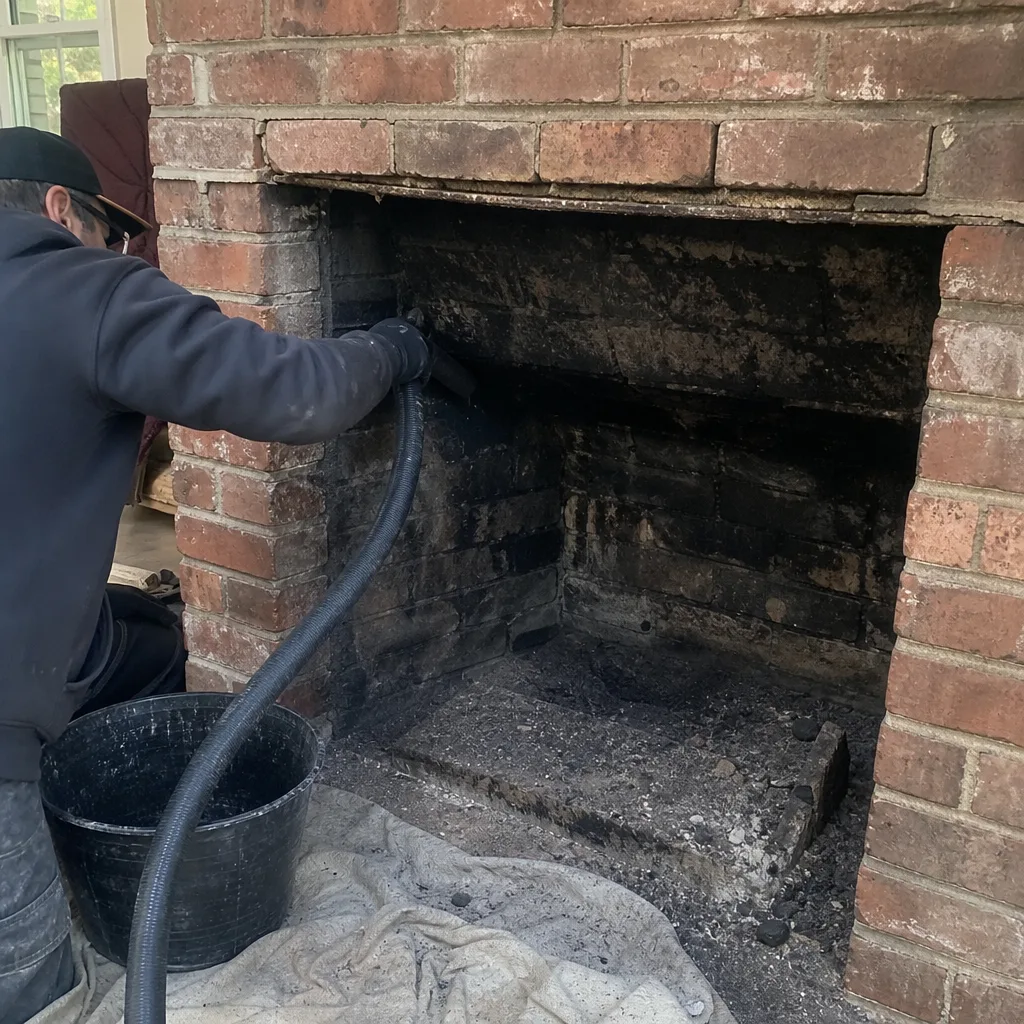 Before
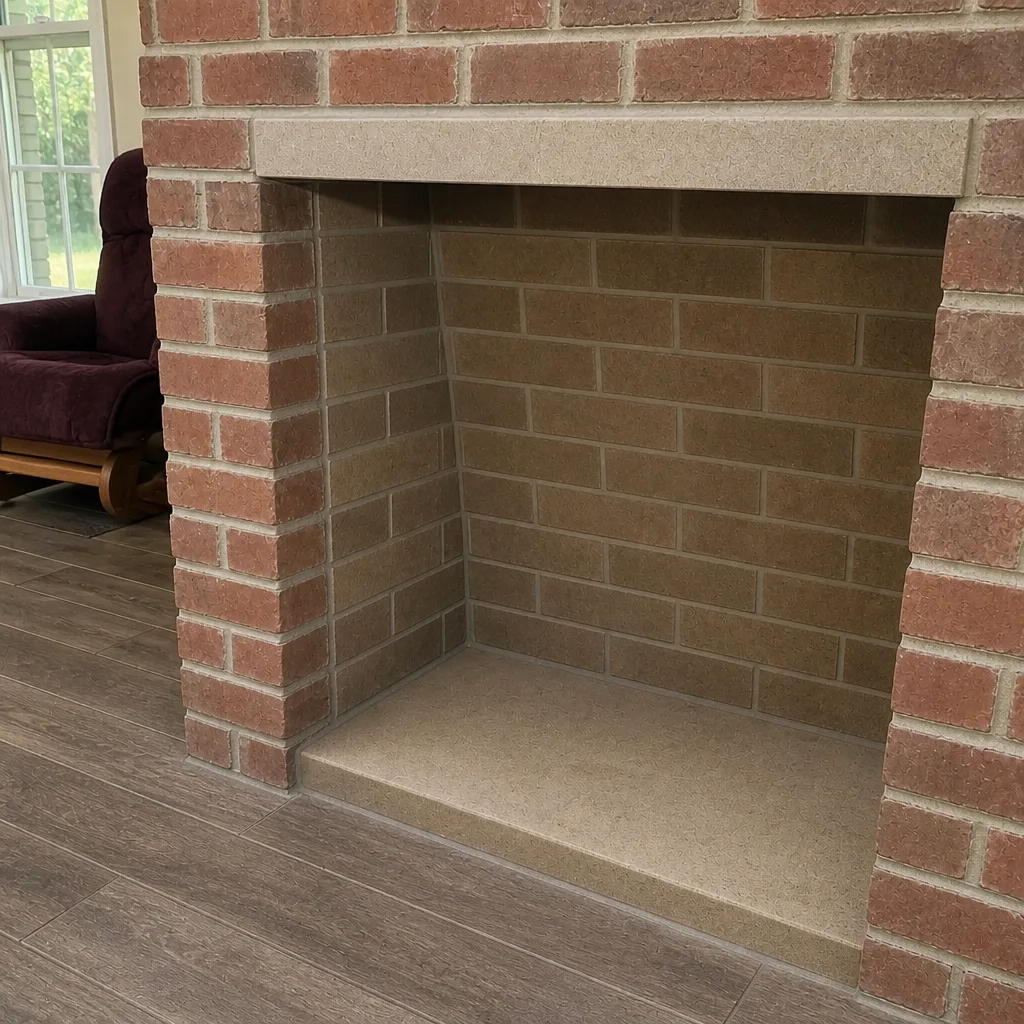 After
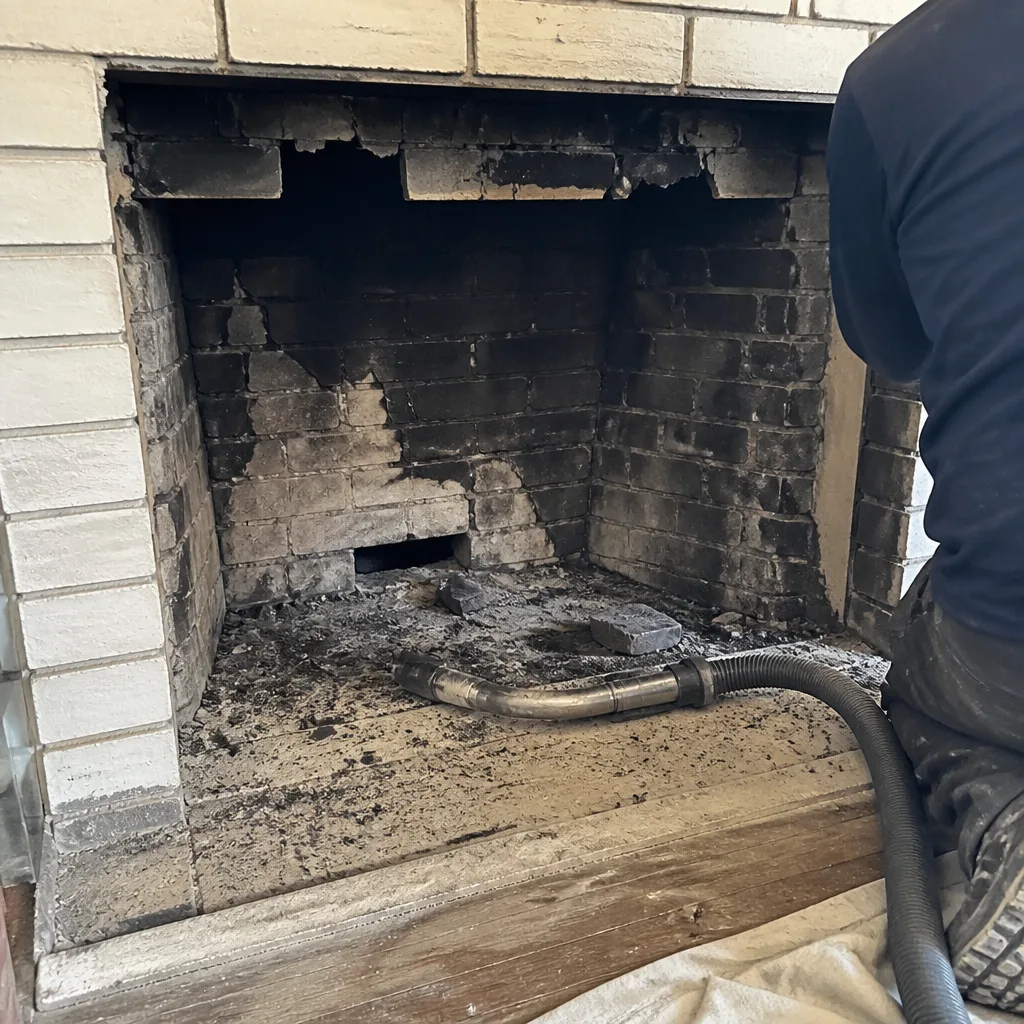 Before
 After
 Before
 After
When to Call a Professional
Any of these situations means the chimney needs a professional look before the next fire: a sharp odor from the firebox on warm days; draft that has weakened compared to last season; black smoke during startup; puffback when lighting a fire; chalky or dark staining on the exterior brick; a newly purchased Edmonds home with a fireplace; a prefab fireplace showing rust, discoloration, or a loose chase cap; or a chimney you haven’t had inspected in more than a year. Any sign of a past fire inside the flue also qualifies. Until then, don’t burn, and keep the chimney’s condition in mind for the next home inspection.
Chimney Sweep Edmonds offers free estimates in Edmonds. Call (855) 726-7158. We answer 24/7, with fast dispatch from 7am to 7pm, Sunday through Friday. Closed Saturday. We connect you with a vetted local professional who can inspect, diagnose, and recommend the next step. Our technicians have up to 14 years of experience.
Frequently Asked Questions
Most wood-burning chimneys in Edmonds need sweeping once a year, or more often if you burn heavily in winter. If your firebox smells strong in summer or your draft has weakened, get it checked sooner than annual. Yearly inspection is the practical baseline for both masonry and prefab chimneys.
A chimney cap is the most reliable defense against water intrusion, birds, and debris getting into the flue. Without one, rain falls straight down the chimney, and an animal nest can block the flue and cause smoke or carbon monoxide problems. A properly fitted cap and crown is not optional for a chimney in Edmonds’ wet winters.
Not reliably, because glazed creosote forms on the upper flue walls and can’t be seen from the firebox. Instead, watch for the indirect signs: persistent acrid odor, weaker draft, dark startup smoke, and tar or chalky staining on the exterior. A camera inspection is the only way to confirm glazed deposits.
Thin white or pale gray smoke means normal startup. Dense, dark gray or black smoke from a fresh fire indicates heavy creosote or unburned tars, and it’s a warning that the flue is loading up. Change your burning habits (dryer wood, hotter fires) and book an inspection.
Rust or blistering on the firebox panels, a persistent metallic smell, a missing or damaged chase cover, and flue joints that have separated inside the chase. These units have exact internal clearances and need an inspection if any of those signs appear. A cap replacement like Olympia Chimney’s is often part of the fix.
No. A chimney fire can leave a cracked terracotta liner or a heat-damaged flue joint that a cleaning won’t repair. The right next step is a professional inspection with a camera, so the damage is documented and the repair scope is clear. Don’t keep burning until that’s done.
Yes. A professional inspection before closing is the best way to know whether a prior fire or a compromised liner exists behind a surface-cleaned chimney. It’s especially worth it for a house built in the 1980s-2000s with a prefab fireplace. It also gives you documentation you can use in the negotiation.
Efflorescence is a powdery white salt deposit from moisture moving through the brick. Tar streaking is a dark, slick stain from creosote leaking through a liner breach. Efflorescence means water; tar streaks mean a flue problem. Both warrant a professional inspection.
The Bottom Line
The most dangerous chimney conditions in Edmonds don’t announce themselves. Glazed third-degree creosote and hidden liner breaches give no visible warning until they cause a fire or let carbon monoxide into the house. Your job is to read the indirect signals: odor on warm days, weaker draft, dark smoke during startup, puffback, and chalky or tar staining on the exterior. Those signs are the chimney’s early notice. A camera inspection settles what’s actually inside the flue, and it’s the only way to see the breach before the next fire does. From the firebox to the crown, we inspect before we recommend, and you see the photos before any work is booked.
Call (855) 726-7158 for a free estimate. We answer 24/7. Fast dispatch from 7am to 7pm, Sunday through Friday, closed Saturday. One crew, start to finish, from the first inspection finding through completed repair. Trade-spec materials from DuraFlex, HeatShield, Gelco, Olympia Chimney, Famco, and Copperfield.
Written by the team at Chimney Sweep Edmonds.