
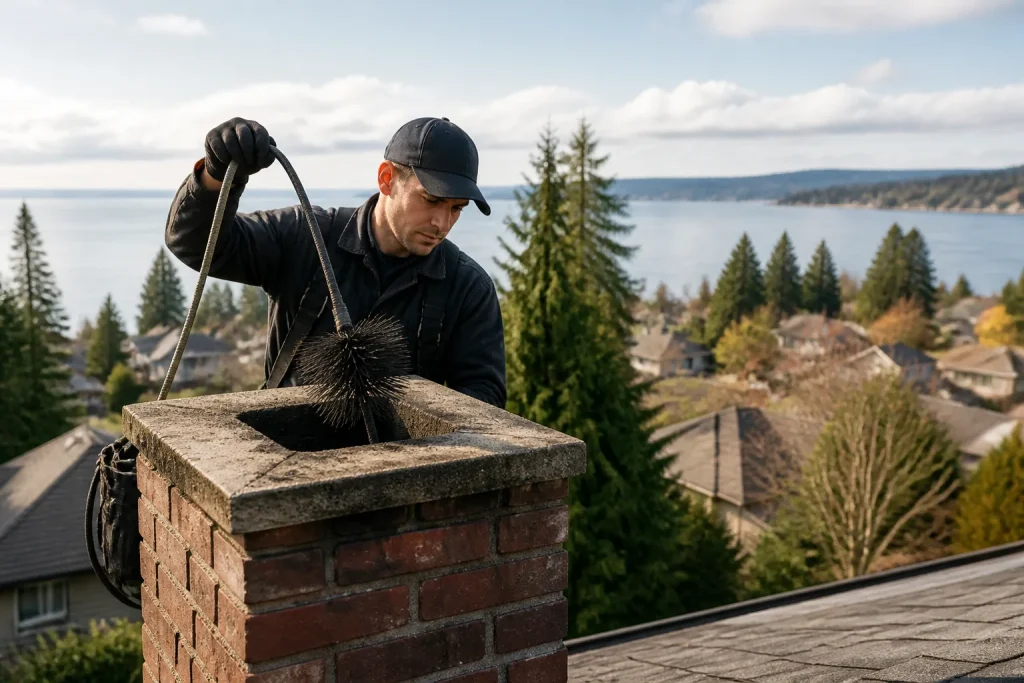
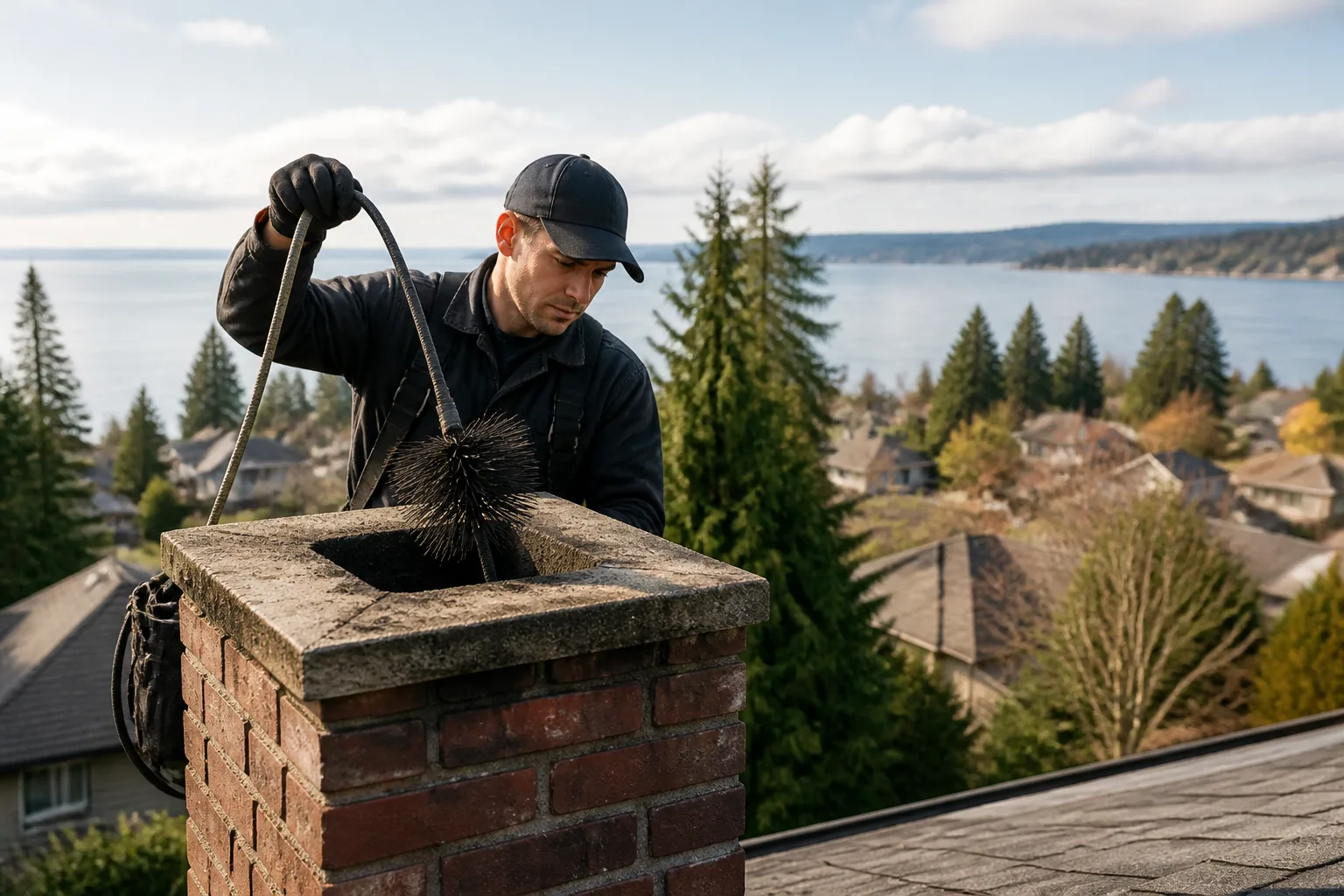
Top Signs You Need Chimney Cleaning Service – Don’t Ignore These
The signs you need a chimney cleaning are usually quiet: a faint smell on a damp day, a fire that sulks instead of catching, a puff of smoke that rolls into the room when you least expect it. Most homeowners chalk these up to wet wood or a drafty house. In our experience, they’re the chimney telling you something mechanical is going on inside the flue. Here’s what to watch for, and what each signal actually means. If reading this makes you want a professional set of eyes on it rather than climbing up there yourself, call (855) 726-7158.
What does that smell on a humid Edmonds day actually mean?
A strong, unpleasant smell from a fireplace on a muggy Pacific Northwest afternoon isn’t a minor annoyance. It’s thermal backdraft pulling combustion byproducts down through a creosote-coated flue, and it does that into your living space whenever the barometric pressure drops. When the air outside is warmer and heavier than the air in the chimney, the flue can reverse its normal upward flow. Any creosote lining the walls gets a chance to off-gas into the room. Homeowners in Edmonds notice it most in spring and early fall, when the weather turns warm and wet but the fireplace sits idle.
That same reversal can happen on a cold, still morning before a fire is lit. The flue is packed with cool, dense air that has to be pushed out before smoke will rise. If it smells sharp, sour, or like old campfire even when nothing’s burning, the flue is coated enough that a professional chimney sweep is the right next step. A clean flue doesn’t hold that smell the same way.
The three stages of creosote, and how to tell them apart
Creosote isn’t one substance. It builds in stages, and each stage looks, smells, and behaves differently. Knowing the difference helps you self-assess between professional visits. We inspect before we recommend anything, but here’s what to look for so you’re not guessing.
- Stage 1 – soot and flaky dust. Looks like black tissue paper or flaky ash coating the flue walls. Brushes off easily. This is normal between cleanings and the stage you want to catch early.
- Stage 2 – crusty and brittle. A hard, shiny, or flaky layer that clings to the walls. It looks almost like dried tar or brittle glass. This is where a standard brush starts to struggle and where a professional inspection matters. Stage 2 creosote burns hotter than most homeowners expect.
- Stage 3 – glazed and glassy. A slick, hardened, tar-like coating that looks almost like melted plastic. It’s dense, it smells strongly of burnt wood, and it’s the stage most associated with chimney fires. Stage 3 usually needs professional-grade tools and sometimes resurfacing.
In our experience, homes around Edmonds that burn often and slowly tend to reach Stage 2 faster than the homeowner realizes. Our technicians have up to 14 years of experience reading exactly this.
Why does your fire struggle to start, and why so much smoke?
A slow-starting fire and excessive smoke are draft problems, not wood quality problems. The most common mechanical causes we see in Edmonds are a flue obstruction (creosote, soot, or a bird nest), negative pressure inside the house, and a damaged damper that won’t open fully. Each one has a distinct behavior. A fire that smokes only when the furnace kicks on points to negative pressure. A fire that smokes every time points to obstruction or a stuck damper.
Modern homes are tight. Bathroom fans, kitchen exhaust, and a furnace all pull air out, and the chimney needs to pull air in to replace it. If the house is sealed well and there’s no makeup air, the chimney competes with the exhaust fans and loses. That’s why a fire can burn beautifully one night and smoke the next. A damaged damper blade that doesn’t open flat limits the flue’s effective size, and you’ll see smoke roll out over the firebox lip every time you light up. None of these are wood-quality problems. All of them are worth diagnosing properly. That’s also why we lead with an inspection before we ever recommend a fix.
Animals in the chimney: what it sounds like and why it’s a safety issue
Chimney swifts, starlings, squirrels, and raccoons all find uncapped chimneys in Edmonds appealing, and the presence of birds around the chimney isn’t just a nuisance. A nesting blockage reduces the flue opening and turns a normal fire into a carbon monoxide risk. Swifts chatter with a distinct ticking sound that carries down the flue, especially in the morning. Starlings bring in twigs and grass and can fill a flue cap in a season. Squirrels and raccoons are heavier and can dislodge creosote as they climb.
If you hear scratching, flapping, or a bird that shouldn’t be in your firebox, do not light a fire. A blocked flue pushes carbon monoxide back into the room. Get a professional out to inspect and clear it, and then install a properly fitted cap so it doesn’t happen again. A cap is one of the least expensive pieces of chimney work, and it prevents the most expensive kind of problem. This is exactly the sort of scope we handle with chimney repair and cap work in one visit.
The exterior warning signs most homeowners miss
Inside the flue is only half the story. The outside of the chimney tells you what’s happening and how long it’s been going on. White staining (efflorescence), crumbling mortar, and a rusted chase cover are three exterior signs that the cleaning need has already escalated to structural damage. Efflorescence appears as a white, chalky powder on the masonry, and it means moisture is moving through the brick and depositing salts on the surface. Crumbling mortar joints mean water has been freezing and thawing inside them. A rusted chase cover means water is getting in where the cap, crown, or flashing has failed.
Edmonds’ wet winters accelerate all three. When more rain hits the masonry and the flue, creosote condenses faster, and freeze-thaw cycles spall the brick surface. A chimney that would take years to show wear in a drier climate can show it in two or three wet seasons here. That’s why we make a habit of checking the crown and flashing on every visit, using trade-spec products from Olympia Chimney, Famco, and Copperfield. It’s how we make sure a fix is built to last, not patched to pass.
When should you call a pro instead of waiting?
Call a professional if you see glazed creosote, hear animal activity, notice white staining on the exterior, smell chimney odors inside the house when no fire is burning, or see smoke rolling back into the room. Call immediately if you suspect a chimney fire has happened, even a small one, because the damage inside the flue isn’t always visible from the firebox. A trained inspection catches what a visual check can’t.
Our technicians have up to 14 years of experience, but the real value is the camera inspection and photo report we include. You see what we see, on your own screen, before any recommendation is made. And if the chimney can safely wait, we’ll tell you that too. From the firebox to the crown, this is the whole-chimney approach that keeps a small cleaning from becoming a large rebuild.
How do Edmonds winters make annual cleaning more important?
They make it more important than the national average would suggest. Creosote that would stay dry in a drier climate can absorb moisture in a damp one, and moisture-laden creosote can be more corrosive to the flue liner than dry creosote. The wet-dry cycle on masonry is the other half of the problem. Water gets into brick and mortar, freezes overnight, expands, and pops the surface off. Repeat that across a Puget Sound winter and you get spalling that looks like the chimney is shedding.
Annual cleaning and inspection is the cheap insurance. It catches Stage 2 creosote before it becomes Stage 3, catches a rusted chase cover before water gets into the framing, and catches a nest before it becomes a carbon monoxide event. In a wet climate, “wait and see” is the expensive choice. A yearly Chimney Sweep Edmonds visit keeps the whole system on a schedule that suits the weather here.
Related services in Edmonds
If a cleaning uncovers damage to the firebox or the damper, our fireplace repair team handles it. If you need a professional-grade cap, crown, or liner work, ask about chimney repair and we’ll route you to the right specialist on the same crew. One crew, start to finish, from the first inspection finding through the completed work.
What happens when you call
- 1
A real person answersNo phone trees – you reach a local pro.
- 2
You get an upfront price rangeHonest numbers before anyone is dispatched.
- 3
A background-checked tech heads outLicensed & insured, dispatched right away.
- 4
You approve before work beginsNothing starts until you say go.
The Bottom Line
The signs of a chimney that needs cleaning are rarely dramatic. They’re mechanical: backdraft smells, struggling fires, smoke rollback, animal noises, white staining, and crumbling mortar. In a wet place like Edmonds, those signs show up faster than homeowners expect. Catch them early and you’re looking at a cleaning. Ignore them and you’re looking at structural repair. If you’re in Edmonds and need help, Chimney Sweep Edmonds offers free estimates. Call (855) 726-7158. We answer 24/7. Fast dispatch from 7am to 7pm, Sunday through Friday.
Most honest chimney work is invisible when it’s done right. If your flue is healthy, a good sweep will tell you so and you won’t hear from us until next year. If it isn’t, the inspection report will show you exactly why, on camera, before anyone recommends a thing.
Frequently Asked Questions
The clearest signs are a strong odor from the fireplace on warm or damp days, slow-starting fires with heavy smoke, glazed or crusty creosote visible in the firebox, animal sounds in the flue, or white staining and crumbling mortar on the exterior. A camera inspection confirms it. Call (855) 726-7158 for an exact quote. Estimates are free.
Once a year is the standard recommendation, and Edmonds’ wet winters make that more important, not less. Creosote condenses faster and masonry spalling is more aggressive here than in drier climates. If you burn often, a spring cleaning after the season is a sensible habit. Call (855) 726-7158 and we’ll tell you what your flue actually needs.
Glazed creosote (Stage 3) looks shiny, hardened, and almost like plastic or tar melted onto the flue walls. It’s dangerous because it burns hot and can fuel a chimney fire. A standard brush won’t remove it, and a professional sweep with proper tools is the only safe way to clear it. Call (855) 726-7158 for an inspection and a written estimate.
Creosote builds through Stage 1 to Stage 3, raising chimney fire risk. Even without a fire, moisture gets into masonry through failing mortar and a rusted chase cover, causing spalling, efflorescence, and eventual structural repair. A cleaning catches all three early. Call (855) 726-7158 and we’ll check the whole system from the firebox to the crown.
Written by the team at Chimney Sweep Edmonds.
Need Chimney Cleaning Help?
Call Chimney Sweep Edmonds - the local pro we connect you with is licensed and insured, with free written estimates in Edmonds.
(855) 726-7158